TLDR: THE BIG TAKEAWAY
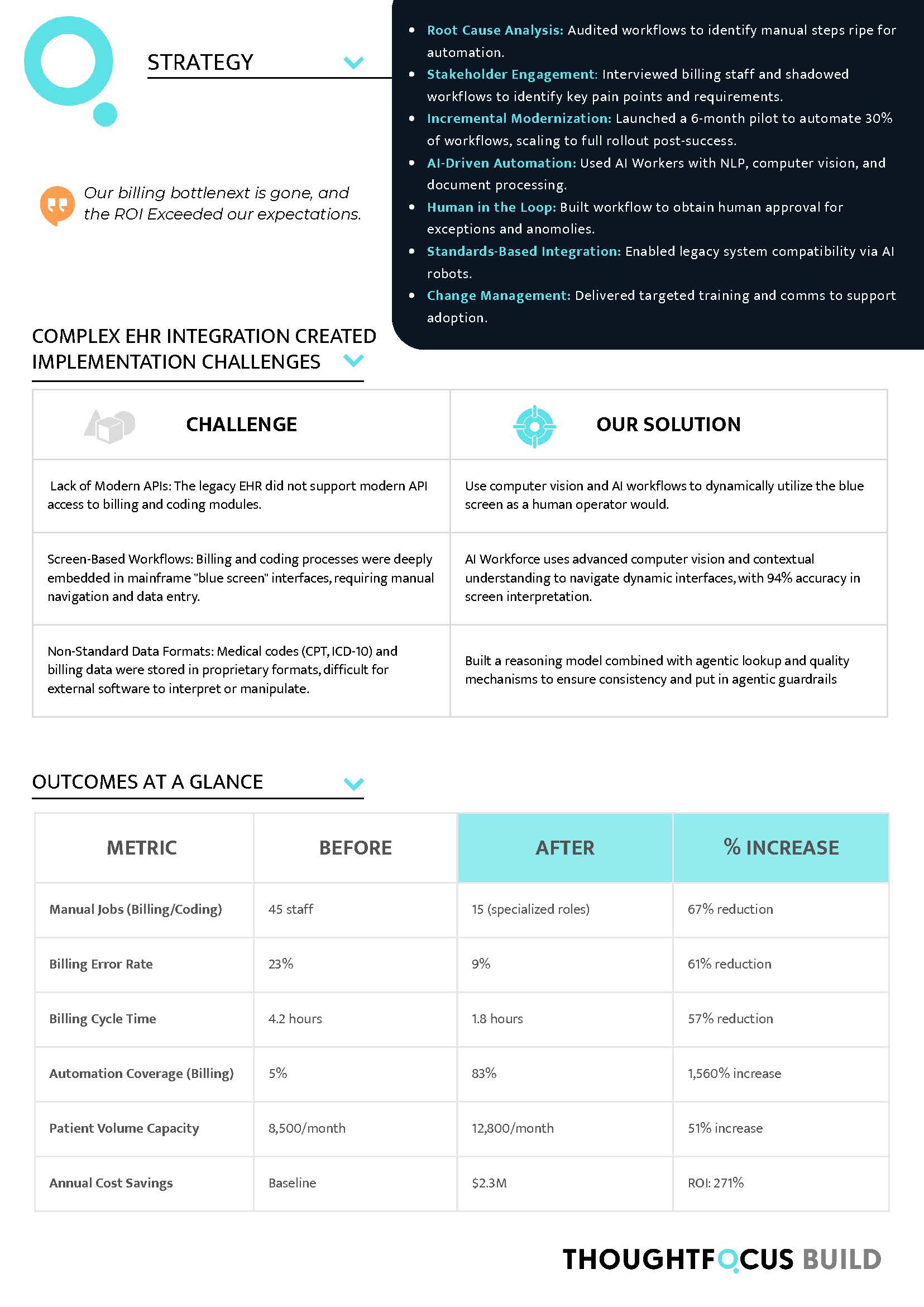
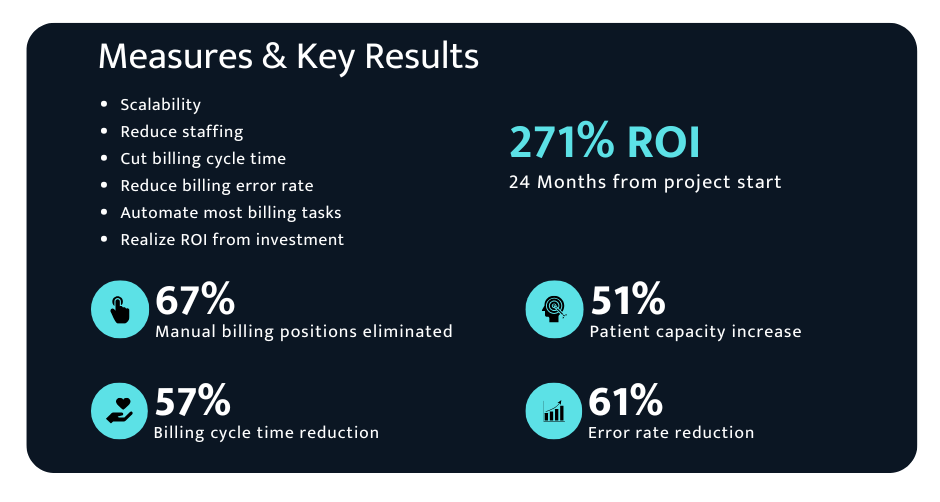
Our proprietary AI Workforce approach delivered a 67% reduction in manual billing tasks and $2.3M annual cost savings while maintaining 100% regulatory compliance.
This hybrid automation strategy enabled our client to scale operations by ~300% without proportional staff increases, proving that legacy EHR constraints need not limit growth.
Client Profile
The client is a private telehealth platform that serves more than 150,000 patients annually, and generates $45M in revenue through virtual emergency care, tele-triage, consultations, and prescription refills.
Operating on a proprietary legacy “blue screen” EHR system, the organization embarked on a 6-month initiative to improve scalability, ensure regulatory compliance, and boost operational efficiency, driven by the needs of clinical staff, IT teams, compliance officers, and patients alike.
Operational Challenges
The workflow relied on a mission-critical legacy “blue screen” EHR that required extensive manual intervention for nearly every workflow.
Pre-implementation baseline metrics showed:
- 247 manual touchpoints across billing and coding workflows
- Average 4.2 hours per patient billing cycle
- 23% error rate in manual data entry
- $4.7M annual labor costs for billing/coding operations
As demand grew, these manual processes became unsustainable, impacting:
- Scalability: The inability to automate workflows limited the organization’s capacity to serve more patients without a proportional increase in staffing. Growth was capped at 15% annually due to operational constraints.
- Operational Risk: Manual processes increased the likelihood of errors, such as data entry mistakes or missed billing steps, which could lead to compliance issues or financial loss. Average $180K monthly in billing delays and rejections.
- Staff Burden: Employees faced mounting fatigue and frustration, increasing turnover risk and reducing overall productivity. 38% annual turnover in billing department.
- Business Viability: The high cost of maintaining manual workflows threatened the platform’s ability to compete and grow. Profit margins declining 3% annually.
Download the Case Study