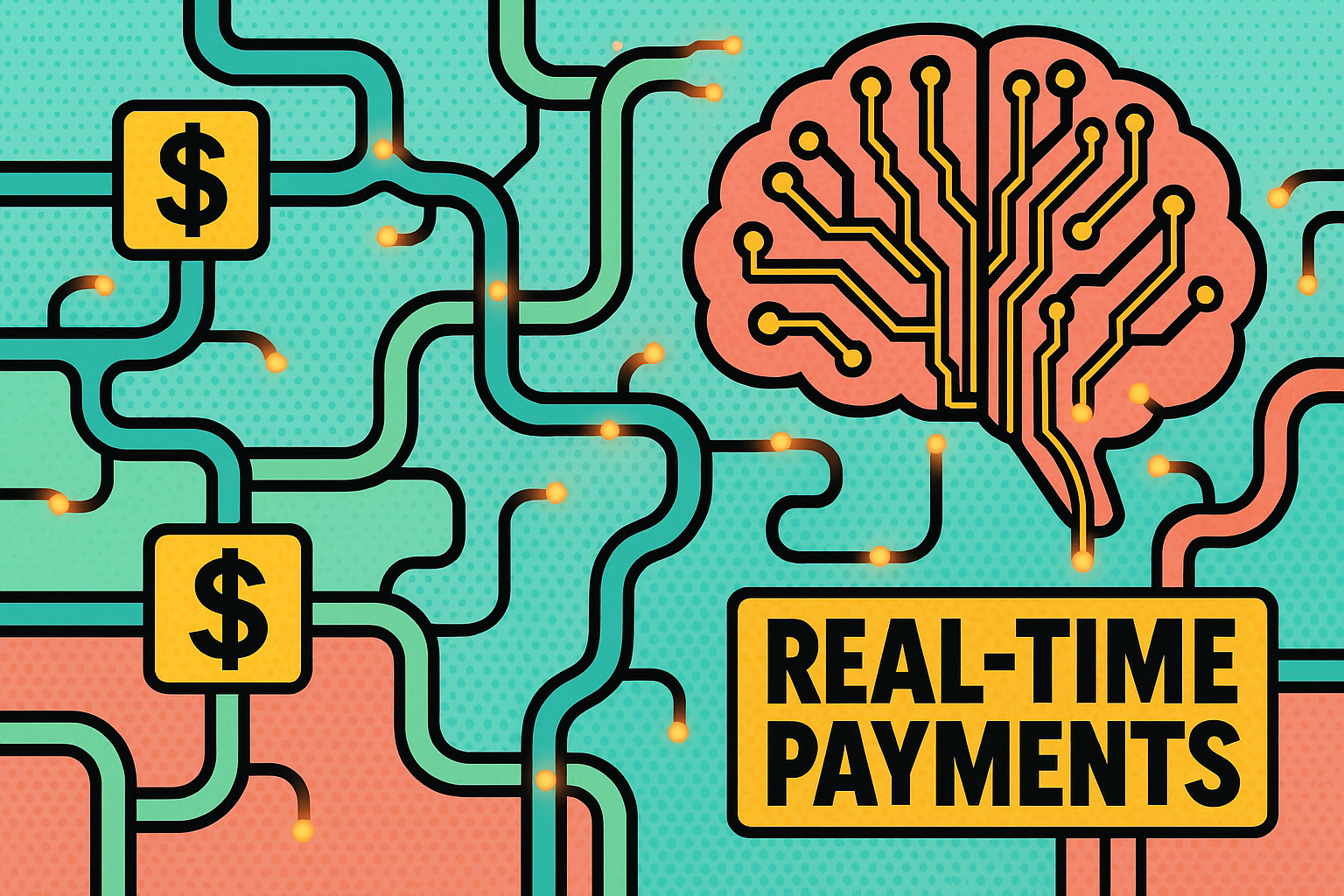
Banks are transforming how payments work by combining multi-rail systems (like RTP and FedNow) with AI technology. This shift ensures faster, 24/7 payments, reduces disruptions, and improves fraud detection. With 58% of U.S. banks now using both RTP and FedNow, single-rail systems are becoming outdated. Multi-rail systems offer:
- Resilience: Payments continue even if one network fails.
- Flexibility: Transactions are routed dynamically based on cost, speed, and demand.
- Fraud Prevention: AI monitors and flags suspicious activity in real time.
AI also optimizes costs by selecting the most efficient rail for each transaction, ensuring banks save money while improving customer satisfaction. As global payment systems evolve, early adopters of multi-rail and AI gain a competitive edge with faster cross-border payments and better customer experiences.
Key takeaway: Multi-rail systems powered by AI are no longer optional – they’re the future of banking.
Multi-Rail Real-Time Payments Become Standard
Adoption Numbers
The rapid shift toward multi-rail payment systems highlights a growing understanding of the risks tied to relying on a single payment network. A single rail can limit flexibility and leave systems vulnerable to disruptions.
Since its launch in 2017 by The Clearing House, the RTP network has laid the groundwork for real-time payments in the U.S. [1][3]. Today, banks are embracing dual systems to enhance both flexibility and reliability. This trend underscores the strategic importance of maintaining multiple payment pathways, setting the stage for the unique benefits multi-rail systems bring to the table.
Multi-Rail System Advantages
Multi-rail systems address a critical challenge: resilience. By eliminating single points of failure, these systems ensure uninterrupted service. If one network experiences downtime or technical issues, transactions automatically shift to an alternative rail, keeping operations running smoothly.
These systems also improve accessibility and efficiency by dynamically routing transactions based on factors like network capacity and market demand. For instance, while some networks are tailored to meet the needs of large corporations, others are better suited for smaller institutions like community banks and credit unions. This flexibility allows financial institutions to serve a broader range of customers while optimizing transactions for cost, speed, and capacity. During peak periods, traffic can be rerouted to maintain consistent performance.
| Feature | Single-Rail System | Multi-Rail System |
|---|---|---|
| Resiliency | Single point of failure | Redundant, more resilient |
| Payment Options | Limited | Flexible |
| Operational Efficiency | Lower | Higher, with dynamic routing |
| Customer Experience | Less flexible | More choices, improved service |
AI-Powered Integration
To maximize the benefits of multi-rail systems, artificial intelligence plays a crucial role. AI automates the integration process, ensuring smooth and efficient routing across different networks. It evaluates factors like network availability, cost, risk, and customer preferences in real time to determine the best routing option. This reduces manual effort, minimizes errors, and ensures transactions are completed quickly and cost-effectively.
AI-powered platforms also continuously monitor transaction data across all rails. These tools detect anomalies and prevent fraud in real time, adding an extra layer of security [2]. With intelligent routing that operates in milliseconds, these systems ensure seamless and reliable payment experiences while optimizing costs and reducing risks.
Single-Rail Strategies Create Problems
Risks of Single-Rail Systems
Single-rail systems may seem straightforward, but they come with serious risks. Unlike multi-rail setups that provide built-in redundancy, single-rail strategies leave banks vulnerable to major disruptions. If the single rail goes down, services grind to a halt, frustrating customers and creating operational headaches. These systems can also struggle to handle high transaction volumes during peak times, limiting capacity and reducing the bank’s leverage when negotiating with network providers.
Another drawback? Single-rail systems restrict access to institutions that rely on alternative networks, shrinking market opportunities. On top of that, varying regulatory requirements can put single-rail systems at a disadvantage, especially in regions where compliance standards favor diverse payment networks.
The Role of AI in Fraud Detection and System Continuity
Traditional fraud detection tools often fall short when it comes to monitoring multiple payment channels. That’s where AI-driven fraud detection comes into play. These systems analyze transaction patterns, user behaviors, and network anomalies across all available rails in real time, providing a more comprehensive approach to security.
AI can instantly flag suspicious activity by comparing transactions to historical data and real-time risk indicators. If fraud is detected on one rail, the system can seamlessly reroute legitimate transactions through other networks, all while maintaining strict security protocols.
But it’s not just about fraud prevention. AI also enhances system continuity by constantly monitoring network performance. It tracks metrics like transaction success rates and processing speeds, quickly identifying congestion or performance dips. When issues arise, the system proactively shifts traffic to keep everything running smoothly.
Additionally, AI enables predictive maintenance by identifying potential problems before they escalate. By analyzing network health, transaction volumes, and historical performance, AI can anticipate disruptions and help banks address them in advance. This proactive approach not only secures transactions but also boosts efficiency and reliability.
Smarter Costs and Better Performance
AI-powered multi-rail strategies aren’t just about safety – they also help banks save money. Intelligent routing systems evaluate transaction fees, processing times, and success rates across different rails, choosing the most cost-effective option for every payment.
With dynamic pricing optimization, AI can track real-time costs across networks and take advantage of promotional rates or reduced fees. For instance, if a rail temporarily lowers its fees, the system automatically routes transactions there, resulting in significant savings over time.
Performance gets a boost, too. AI learns from historical data to predict which rail will handle specific transactions most efficiently. For example, corporate payments might go through RTP for higher limits, while consumer transfers could use FedNow for broader compatibility.
The Future of AI and Embedded Payments with Bank of America’s Rich Clow
RTP, FedNow, and AI Working Together
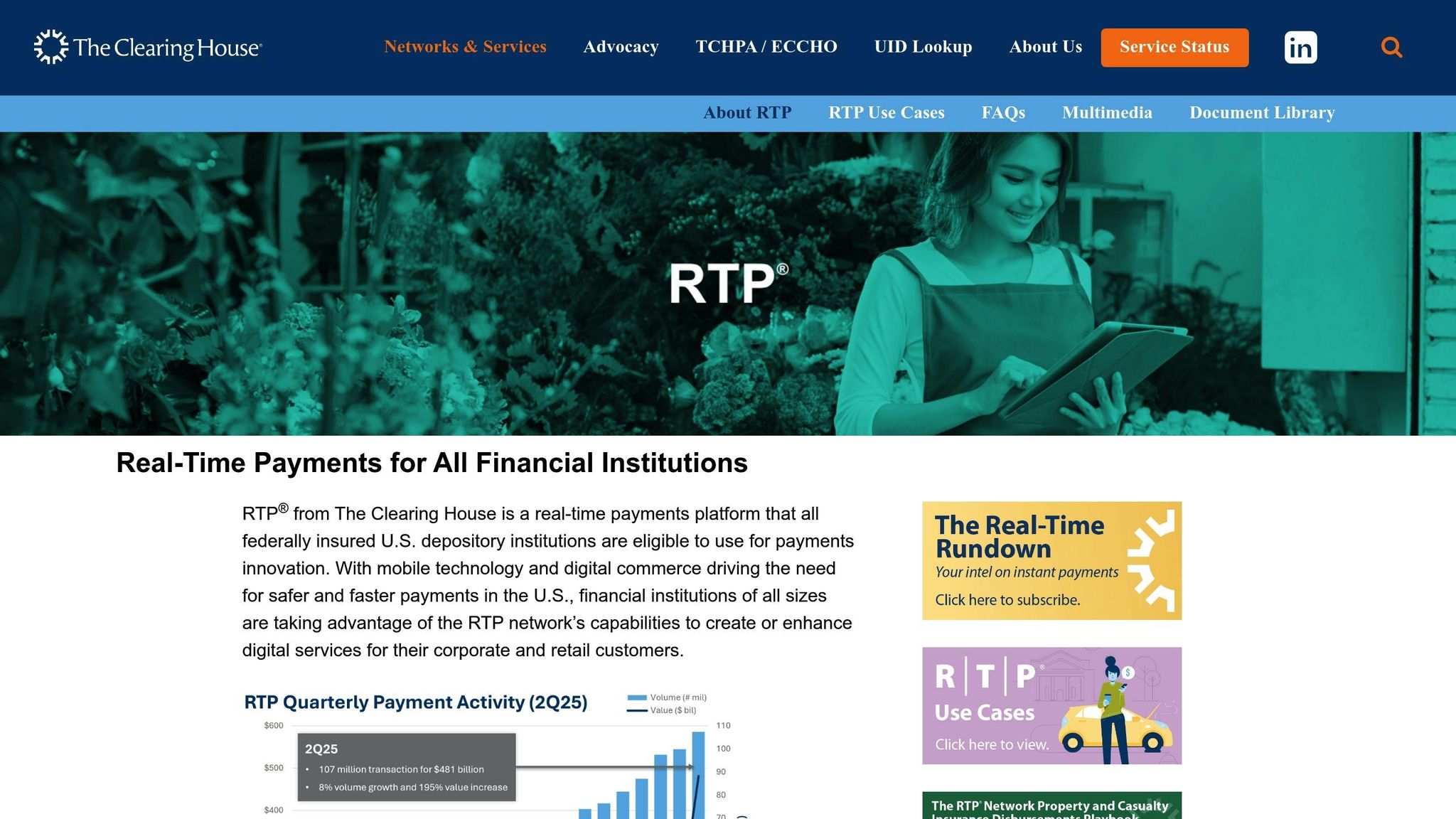
Let’s dive into how RTP, FedNow, and AI complement each other to create a seamless payment ecosystem.
RTP and FedNow: The Backbone of Real-Time Payments
In the U.S., real-time payments operate on two key systems. RTP (Real-Time Payments), introduced by The Clearing House in 2017, supports transactions up to $10 million and has a strong foothold in corporate banking. On the other hand, FedNow, launched by the Federal Reserve in July 2023, allows payments up to $1 million and operates 24/7, catering to a wider range of financial institutions. While RTP has built a reputation for handling high transaction volumes in the corporate sector, FedNow is quickly gaining traction by onboarding more banks and credit unions.
How AI Chooses the Right Payment Rail
AI-powered multi-rail systems are revolutionizing the way banks process payments. By analyzing factors like transaction size, recipient bank capabilities, time of day, network congestion, and fees, AI determines the best rail for each payment. For example, corporate payments with higher values might be routed through RTP, while smaller consumer transactions are directed to FedNow. This decision-making process relies on real-time data, ensuring smooth operations and an improved customer experience.
Better Operations, Better Customer Experience
AI orchestration doesn’t just optimize payment routing – it also enhances operational efficiency and customer satisfaction. During high-traffic periods, AI balances transaction loads across rails to prevent delays or system overloads. This means faster settlements and fewer errors for customers. AI’s predictive abilities also play a key role, using historical data to anticipate busy times and adjust routing strategies accordingly. Additionally, automated compliance and reporting provide detailed audit trails for every transaction, simplifying regulatory requirements and operational reviews.
sbb-itb-5f0736d
Consumers Want Fast and Smart Payments
Today’s consumers expect speed and efficiency, especially when it comes to payments. A staggering 90% of U.S. consumers now prefer instant payouts, and 94% say it significantly increases their satisfaction with a service[2]. To meet these expectations, banks are turning to multi-rail systems – technology that routes transactions through the quickest available channel, like RTP or FedNow. These systems ensure payments are processed instantly, anytime, day or night. It’s no longer just a convenience; it’s the standard customers demand.
Younger generations are particularly insistent on this level of service. They expect their banking experience to match the immediacy they’ve grown accustomed to in other areas of life. For banks, leveraging multi-rail solutions isn’t just about speed – it’s also about offering secure and personalized payment options that align with individual customer needs.
Artificial intelligence plays a critical role here. By analyzing transaction histories and user preferences, AI can determine the best payout channel for each transaction while also enhancing fraud detection measures[2].
The benefits of these solutions go beyond meeting immediate demands. Banks that implement multi-rail systems and AI-driven tools report higher customer satisfaction and retention rates. Instant, reliable payments build trust, encouraging customers to explore additional banking products and services. This creates a ripple effect, driving long-term customer loyalty and value for financial institutions[2][3].
Future: AI-Powered Global Payment Systems
The concept of multi-rail payment systems is still in its early stages, but it’s already reshaping how transactions are processed. Platforms like RTP and FedNow are paving the way for a global network where payments can move effortlessly across borders, currencies, and time zones. Banks that are forward-looking are preparing to lead this transformation, leveraging domestic advancements to drive global strategies aimed at enhancing payment efficiency.
Multi-Currency and Cross-Border Expansion
What started as domestic innovations in payment systems is now extending across borders. Banks are integrating systems like India’s UPI, Brazil’s Pix, and Europe’s SEPA Instant Credit Transfer into their networks. The challenge lies in creating smooth connections between these diverse systems. A robust multi-rail infrastructure must dynamically adapt, routing payments through the most efficient channels while handling currency conversion, compliance checks, and real-time risk assessments. Some banks are already piloting cross-border instant payment corridors, showcasing how blending domestic and international systems can streamline operations and improve efficiency.
AI in Global Payment Networks
As payments traverse borders and currencies, the role of AI becomes indispensable. AI systems are tasked with making immediate decisions on routing, compliance, and risk management. Building on their success in domestic markets, banks are now customizing AI for the complexities of international transactions. For instance, predictive routing uses AI to analyze past transaction data, network capacity, and real-time conditions to determine the best route for a payment. Similarly, AI-powered fraud detection adapts to regional payment patterns, while dynamic capacity planning ensures smooth operations during fluctuations in international transaction volumes.
Early Adopter Advantages
Banks that invest early in AI-driven multi-rail systems stand to gain significant benefits. These systems reduce the need for manual intervention, cut costs, and lower the risk of failed transactions – facilitating real-time cross-border payments and multi-currency services. Beyond operational improvements, the data generated from these systems offers insights into customer preferences, market trends, and performance metrics, allowing banks to refine their offerings and strategies. Early adopters who excel in implementing these AI-enhanced infrastructures will be better equipped to adapt to new payment technologies and maintain a competitive edge in an ever-evolving market. This shift towards a global, AI-powered payment ecosystem underscores the future of seamless, efficient transactions.
Conclusion
The move toward multi-rail payment systems, powered by AI, is reshaping how banks handle payments. With 58% of U.S. banks already using both RTP and FedNow[2], multi-rail strategies have shifted from being optional to becoming a key component of modern banking.
Banks sticking to single-rail systems face risks like service disruptions and limited customer options. By adopting multiple payment rails supported by AI, banks can cut down on payment failures, speed up settlements, improve fraud detection, and offer better customer experiences. As these systems expand to include cross-border and multi-currency transactions, early adopters stand to gain significant new revenue streams. The time to act is now.
For banks ready to make this leap, ThoughtFocus Build provides expertise in AI-powered workforce solutions and payment technology integration. Their tools are designed to optimize routing, strengthen decision-making, and enhance fraud detection. By combining AI-driven models with hybrid AI-human operating systems, ThoughtFocus Build helps banks adopt multi-rail systems more efficiently, reduce costs, and increase reliability. Embracing multi-rail and AI technologies is no longer optional – it’s essential for staying competitive in today’s financial landscape.
FAQs
How do multi-rail payment systems offer better resilience and flexibility than single-rail systems?
Multi-rail payment systems bring a strong layer of reliability by removing single points of failure. By leveraging multiple networks, such as RTP® and FedNow®, they ensure payments keep flowing even if one network faces downtime. This setup makes them a dependable choice for real-time transactions.
Additionally, they offer flexibility by letting banks and businesses pick the most suitable network for each transaction. Decisions can be made on the fly based on factors like transaction size, cost, risk, or network availability. This smart approach not only boosts efficiency but also helps meet the increasing demand for fast and secure payment options.
How does AI improve fraud detection and reduce costs in real-time payment systems?
AI plays a powerful role in improving fraud detection within real-time payment systems. By constantly monitoring transactions across various payment channels, it can quickly spot unusual patterns or behaviors that might indicate fraud. This real-time vigilance helps prevent fraudulent activities while also reducing disruptions to services.
Beyond just detecting fraud, AI evaluates transaction risks on the fly, striking a balance between security and user experience by minimizing false declines. Tasks like spotting anomalies and scoring risks are automated, which not only boosts security but also lowers costs by cutting down on manual reviews and simplifying processes. This blend of stronger security and streamlined efficiency positions AI as a transformative force in the world of real-time payments.
What benefits do banks gain by adopting AI-powered multi-rail payment systems early?
Early adopters of AI-powered multi-rail payment systems gain several standout benefits in the ever-evolving global payments space. By connecting multiple payment rails, banks can achieve higher operational efficiency. AI plays a vital role here by streamlining transaction routing, cutting down resource use, and fine-tuning the overall processing flow.
These systems also take fraud detection and prevention to the next level. With real-time monitoring, they help reduce risks while ensuring smooth, uninterrupted service. Another big win? Improved resilience – multi-rail setups minimize the risk of disruptions by eliminating single points of failure.
For banks that embrace this tech early, the rewards are clear: a competitive advantage in delivering faster, smarter, and more dependable payment solutions that keep up with the changing needs of both consumers and businesses.